
Tag Archives: France
Tasting Notes from the Cellar

There are lots of ways to put together a collection of older wines. Collect and store them in a cellar, buy them from a reputable merchant who has stored them, steal them from a friend, find a store that has found a so-called library release of wines aged at the winery, et cetera. Each of these methods (Except stealing. I think.) were put to use a couple weeks back when a group of us got together to drank some older wines.
A few notes, recorded for posterity’s sake…
1979 Roagna Barbaresco
Delicious from the start, this might have been my favorite wine of the evening, opening up to a beautifully tart and fruity wine with very noticeable spicy and herbal undertones. Tarragon? Mint? Tobacco? Umami? A really nuanced wine that moved from being a bit tannic to downright light and lively. As Todd said, the “most complete wine” of the evening.
1989 Beaucastel, Chateauneuf de Pape
Earthy and big to start, it finished with an edge that smoothed out and opened up over time. A little funk early on that blew off quickly. Lots of fruit, though, even from the onset. Steve observed it might be on the downside of its life. But after a couple of hours, the leather and tannin subsided a bit. Pretty classic; a fine drink.
1999 Antoine Arena, Patrimonio
Dark, deeply colored, full of sediment, brooding aromas to start. Dirty, tannic, earthy wine. Some minerality and acid. Looks brooding, full of flavor, but surprisingly youthful. I wish I’d taken more detailed notes, but the general sentiment was that this was in a good place. Steve observed in retrospect that it was hard to wrap his head around this, and I agree: It was the biggest of the all and came late in a long night of drinking.
1990 Bongran Macon Clesse
 Remarkably unique. Truly. Drew a chorus of quizzical looks and comments. Todd described the aromatics as being a lot like coffee beans, and Putnam began to latch onto that as a descriptor for the flavor as well. I think I see what they were getting at in terms of a the long, slow, earthy quality of the fruit. Floral and honey notes. Not sweet but clearly botrytized grapes. Lots of tropical fruit but not of the predictable sort found in so many overly engineered wines. Some in the group felt it would be hard to drink this in any serious quantities, me among them, but it’s hard to deny its brilliance.
1996 Dugat-Py Bourgogne Rouge
I wonder what this cost on release. No famed crus on the label. Just good wine in the bottle that has lasted until now. Light, refreshing, but still structured. As Putt said, it’s “chuggable.” Of course, Putt thinks whiskey is “chuggable.” But still, I tend to agree. We also had a 1995 Marechal Pommard, and the Dugat-Py was in a far better place. The other was gnarled and dare I say backward whereas this was simply pretty.
1999 Juge Cuvee C Cornas
Coming after a puckeringly tart Morgon and even the Chateauneuf, this was downright jammy. Young and fruity. A nice dose of acid, but compared to other wines, this really seemed sweet. Delicious but didn’t really suck me in the way some others did.

Drinking 2009 Jaboulet
Since the early 19th Century, Paul Jaboulet Aîné has been rocking folk’s taste buds with wine produced in France’s Rhône Valley. If you’ve ever browsed the French section of a wine store you’ve likely seen their Côtes du Rhône Parallèle 45, an entry-level southern Rhône blend of Grenache and Syrah.
But they built their reputation through parcels in the northern Rhône, Hermitage La Chapelle being the most famous. The 1961 vintage of Hermitage La Chapelle has achieved an almost mythical status among the wine cognoscenti (only $12k/bottle for those of you with a little extra disposable income).

Things weren’t as bright for Jaboulet through the 90s and into the new century. Production was up but quality was patchy. In 2006, the Frey family (proprietors of Chateau La Lagune in Bordeaux) purchased Jaboulet and applied sweeping changes that included a stricter selection process and significantly lower yields.
This is all just the long way of saying we hung out at Café Muse the other day and drank some 2009 Jaboulet with Elie. It was tasty.
My notes:
Châteauneuf du Pape “Domaine de Terre Ferme”
We started with the one southern Rhone in the bunch. Aromas of purple jelly led into wood smoke. Full body across the palate finishes long and herbal. This wine wanted to arm wrestle with me but I declined.
Côte Rôtie “Domaine des Pierrelles”
An elegant wine. On the nose there’s an initial hit of buttered toast and fruit compote that morphs into cedar and then flowers and then other lovely things our ancestors would know better than us. It somehow balances heft and grace like a ballerina that throws shot put as a hobby. All of the wines had plenty of acidity but it shone brilliant in this one, long and juicy. I’m writing this note a week later and I still get all tingly just thinking about it.
St. Joseph “Domaine de la Croix des vignes”
Fat with aromas of ripe fruit. Balanced across the center. There is weight here and also a long and dry finish sprinkled with powdery tannin.
Cornas “Domaine St. Pierre”
Immense nose of crushed berries and meat. Once you make it past the massive tannins a long and happy acidity shows. The provided tasting notes mention that you might want to cellar this monster for at least a decade before drinking. I believe those notes.
Crozes Hermitage “Domaine de Roure Rouge”
Heady aromas of stones, river banks, flowers, cedar closets, etc…all swirly and turning into steamed fruit and everything else. Fat, almost sweet through the middle yet finishes with a lively acidity. I can’t get my nose out the glass and I even save a bit for later sniffing.
Hermitage “La Petite Chapelle”
Nothing small about it. A dense and succulent drink of wine beneath scents of black currant liqueur and herbs.
Hermitage “La Chapelle”
If I counted off the aromas and flavors it would read like a French country village market shopping list including a side of beef. It is said that this wine will age 50 years. Grab a case and you might make your grandkids rich.

On Gourmet
When Detroiters walk into Astro Coffee, it’s not uncommon to see a first-time patron walk up to the counter, look up at the menu, and say something like “I don’t want the gourmet coffee; what’s the regular one?” Or conversely, it’s easy to stroll the aisles of a supermarket and see trail mix, pasta, or hot dogs branded as gourmet products.
Context is everything. A word so over-utilized can only derive meaning from a group of people with a shared understanding of its meaning. It’s probably, then, the case that people who appreciate cuisine and its place in the world also can appreciate some elements of its history and even its lexicon.
Much like food and drink, language focuses a powerful lens on the unique aspects of a given culture. So it should be of little surprise that gourmet, one of our most enduring terms for describing those of discerning taste, is derived from French. It seems suitable that a country capable of producing burgundy and inventing Bearnaise should have coined a term for appreciation of delicacies that’s lasted almost 200 years and across languages.
Perhaps the most well-known gourmet since the term came into popular usage was Jean Brillat-Savarin. His 1825 book The Physiology of Taste is widely regarded as the archetype for the contemporary food essay. Written in French and later widely translated, it was released only five years after the earliest use of the term in English as cited by the Oxford English Dictionary (OED).
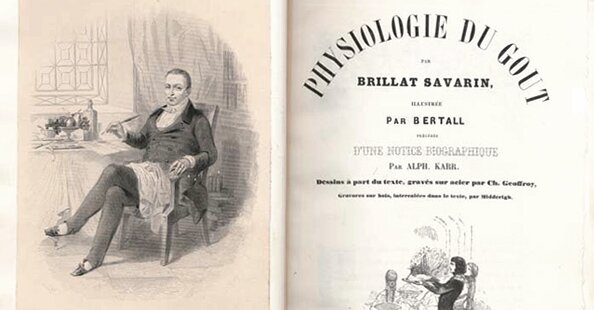
Among his numerous opinions, Brillat-Savarin comes to the conclusion that “Those persons who suffer from indigestion, or who become drunk, are utterly ignorant of the true principles of eating and drinking.”
He’s drawing the distinction between gourmand and gourmet, between those who over-eat and those who enjoy quality. Interestingly, the former is a much older term: The OED cites an early written usage of gourmand in Vitae Patrum by English merchant William Caxton in 1495. While the two are often used interchangeably today, the two are, in fact, historically unrelated.
Derived from Old French words groumet and grommes meaning “manservant,” the term gourmet grew in Middle French to describe specifically the role of a wine valet, an attendant who understood the full range of wines’ properties. Such a servant was skilled, able to quite possibly discern a wine’s characteristics and origins from smell or taste.
While the OED hints that there may have been some earlier cross-pollination between Germanic languages and Old French, other sources are more confident in the connection. Some speculate that the root of the word groom, the Old English grōma (meaning a male child), was incorporated into the French language, initiating the evolution toward gourmet.
Of course, all that said, people were celebrating great food long before French aristocrats were training young men to sniff their wines for them.
Epicurus, the Greek philosopher, is the inspiration for English words epicure and, now, modestly clever combinations of words like “epicurious.” Today, Merriam-Webster defines an epicure as “one with sensitive or discriminating tastes,” a definition strikingly similar to that of a gourmet, though it also lists an archaic definition for one devoted to sensual pleasure.
It seems that this misconception of Epicurus as an unabashed hedonist emerged from something of a smear campaign against his name. While he is now widely acknowledged for having lived a modest life, his philosophy of simple, virtuous living leading to absence of pain or suffering was rooted in an atheistic worldview that eschewed an afterlife. Such thinking was clearly considered dangerous by many Christians throughout their own early history. Indeed, a derivation of his name came to be synonymous with heresy in early Christian cultures, and its earliest usages in English relate as much to religion as they do to food: Thomas Cooper, bishop of Winchester, lamented in his 1859 An admonition to the people of England that “The schoole of Epicure, and the Atheists, is mightily increased in these dayes.”
Still, throughout the 1600s and 1700s, his name was synonymous in some English-speaking circles with dainty, thoughtful consumption of delicious food, meaning that despite its confused origins, it pre-dates gourmet in its conveyance of this concept.
In the 20th century, though, there can be no doubt that “gourmet” came to symbolize all the finest things in the culinary realm. Even the magazine, Gourmet, that carried the term on its cover for seven decades is something of a metaphor for the word itself. When it debuted in 1941, Gourmet was the pinnacle of food magazines. While its primary competition was printed in black and white on newsprint with more modest recipes on its pages, Gourmet aimed to bring haute cuisine to its readers and itself embodied the spirit of the finer things, printed in color on glossier paper. Critics like James Beard reviewed restaurants in fashionable locales, and French cuisine was prominently featured.
But by the time the 90s came about, can anyone say that Gourmet carried itself differently than any other magazine? Scanning the shelves at a book store, it blended in among the dozens of new periodicals. Instead, it was larger, denser, more serious publications that came to earn respect, like Gastronomica or The Art of Eating. While Ruth Reichl, editor for the last years at Gourmet, managed to feature spectacular writing (look no further than getting David Foster Wallace to write about lobsters), the image of the magazine became confused: It sat next to bubble gum on store shelves, and in an effort to capture younger readers content was no longer solely aimed at the white linen crowd. Conversely, in its earliest history, there was a clear audience: It was reserved for those who cared and, frankly, probably those who had the means to care.
It’s a decent parallel. Just as the Gourmet brand saw itself diluted in a sprawling, re-emergent American food culture, the term gourmet has ostensibly lost its value with every package of preservative-laden, gourmet-labeled product that came to grace grocery store shelves. If everything is gourmet, then nothing is.
That said, with 200 years of history behind it, there’s still a case to be made for gourmet as a valued part of our cultural dictionary. After all, in context, it still has meaning. And among people who do truly care about what they’re eating, it can retain that meaning, the one and the same about which Brillat-Savarin wrote 200 years ago. At the very least, I’m sure everyone can agree it’s more appealing and more appropriate than foodie.
Three Gamays
A week or so ago, I swung into Everyday Wines in Ann Arbor. Jackie pointed out some new wines, including a few of her favorites. I decided to select a few gamays that she and Mary were enjoying. Some tasting notes:
2006 Cote de Brouilly, Domaine de Robert Perroud – Smells like flowers, spice cake, cola, and dried cherry. I’d think at first whiff that it was destined to be sweet and luscious. And it begins to hint at those ripe, fruit forward flavors. But there’s some serious grip to this wine, even after a few years of bottle age. The finish doesn’t linger, but there’s depth here. Lots of pretty layers to this.
2009 St. Pourcain, Chambre d’Edouard, Domaine Grosbot-Barbara – Light and fun, there’s that quintessential stony nose characteristic of so many Loire wines. This is obviously a brighter wine, though, with less “rocks” and more pure fruit. A Pinot Noir/Gamay blend that’s dominated by the former, this is the most delicate and playful of the three wines I’m trying. Tart cherry, berries, and flowers. A real value in the neighborhood of 15 bucks.
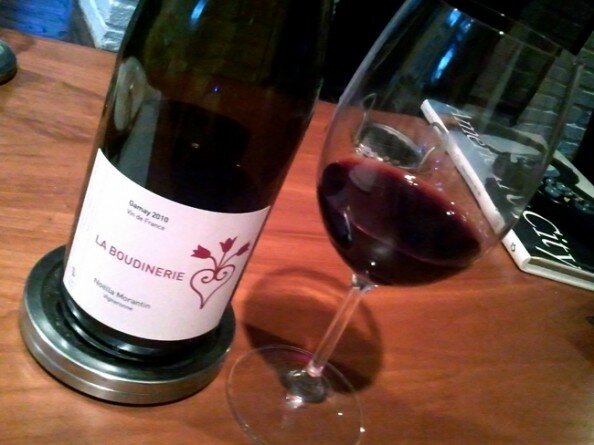
2010 Gamay La Boudinerie, Noëlla Morantin – This wine can be a bit of a head scratcher at first. On one hand, this strikes me as being very similar to any number of dirty, rustic Loire Valley gamays, most notably from the Touraine appellation. On the other hand, this does have some interesting qualities. And in reading up on Morantin’s wines, it looks like she does indeed work in that region and is located near the sites of some of my favorite Loire gamays. So this is in many respects the essence of natural wine reflecting terroir: the natural yeast, the soil, the grapes, the weather should all be similar to these other wines. With minimal manipulation, it’s unsurprising that there are so many features similar to other wines I love. So what this may lack in distinctiveness relative to other “natural” gamays from the region, it makes up for in enjoyment and expression of a place and an ideal. All that bullshit aside… There are grape undertones to an otherwise earthy nose. Mildly herbal, there are mostly berry flavors here and a bit of astringency and acidity at the finish. Opens up quite a bit over a half hour. While this strikes me as a bit dull and earthy, it’s fundamentally nice stuff with a rustic yet feminine quality.
Some of these, notably the Morantin, are available elsewhere, but if you’re in A2, stop in and see Mary, Jackie, or Putnam at Everyday Wines in Kerrytown!
From the Charente to Oaxaca
Despite being situated near the few Californian wineries I enjoy, Ukiah was a town unfamiliar to me. But over the days following my first sip of Maison Surrenne cognac, I began to do a bit of reading on the producer and the US-based representative of the product, a company out of Ukiah called Craft Distillers.
My simple 10 minutes of web research turned into an eye-watering 5-hour journey down the web research rabbit hole. I’m officially adding brandy to the list of drinks to which I’m more or less addicted.
Ansley Coale, who has been kind enough to read and comment on my previous cognac blog post, founded Craft Distillers to help distribute artisanal spirits ranging from cognac to mezcal, whiskey to rose liqueurs. He’s also involved in a distillery in Ukiah that carries the name of his partner, Hubert Germain-Robin, the latest in a long line of brandy producers, albeit the first on this side of the Atlantic.
Having now sampled that California brandy, two cognacs, a mezcal, and a rose-infused liqueur, I feel confident saying the items with which Mr. Coale associates himself are superb examples of their various styles and among the better spirits I’ve had recently.
His products – save Hangar One vodka, which he sells to subsidize his other endeavors – are not available in Michigan (of course), but they are worth saving up for and hunting down. I posted about my first bottle of Maison Surrenne Borderies, but there are some additional notes below.
Finally, I’ve also learned a thing or two about appropriate glassware. While I don’t subscribe to the theory that 20 different wines or beers require 20 unique glasses, I certainly hold it to be true that glassware has an effect on what we taste. In this case, the claims that a tulip glass are superior to a snifter are unquestionably true. Snifters create a more volatile, hot drink, whereas the tulip glass seems to emphasize the fruit and barrel flavors.
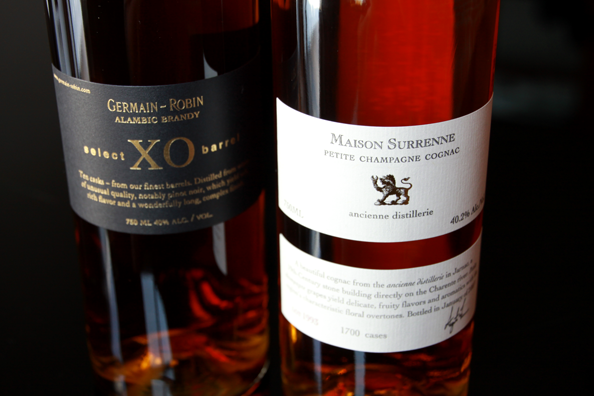
So armed with a tulip glass, I went about sampling some new drinks (Photos are courtesy of Chance Landrews, staff photographer at the Sugar House Bar):
Maison Surrenne, Petit Champagne Cognac, Lot 1991
There’s the same buoyant, delicate quality as the Borderies (as noted in my previous post on cognac, Bordieres and Petit Champagne are specific regions within Cognac) I’d had previously. But it isn’t so rich and silky, nor is it as clearly violet scented or flavored. More so, it has subtly sweet, fleshy fruit qualities. The finish is a bit hotter and spicier, though that’s not to say it’s inelegant. Quite the opposite. It’s a very well-balanced drink. Compared to this region, Borderies is supposed to have richer soil due to river deposits, and that’s unsurprising — this has a stonier, sharper edge.
Germain-Robin XO Select Barrel
This couldn’t be more opposite than the Surrenne above. The wood shows more of its role here in the form of a much richer, denser body. Aromas of caramel and grilled/baked fruits. Oaky vanilla flavors, though the caramel isn’t noticeable on the palate. And then there’s the fruit. I don’t know enough about brandy to understand if this relates to the distillation process or to the heavy amount of American pinot noir, but there’s a strawberry and apricot nose to this and very subtle red fruit flavors. I didn’t sense them in my first taste, but the more I got accustomed to this drink, the more I became fixated on some of these fruitier flavors rather than the barrel flavors. Regardless, this is a deep spirit, equally potent and nuanced.
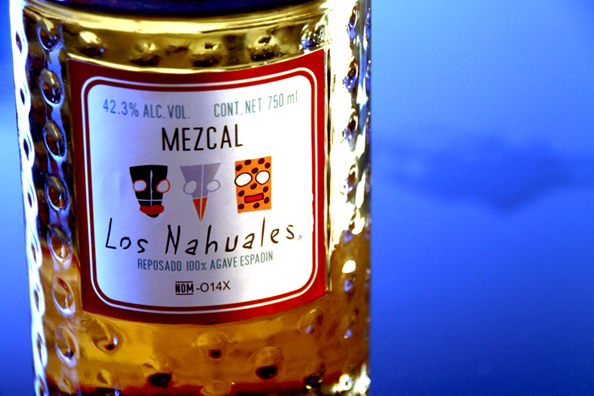
Los Danzantes Los Nahuales Reposado
I’ve had much smokier mezcals, though I always get the feeling that they’re smoky to cover something else up. Not so here. Instead, this has true depth from the first whiff through the lingering finish. There’s a certain orange-ish flavor reminiscent of some Irish whiskies, but it’s dominated by a sweet, pleasant smokiness. It’s not salty in the way scotch can be, but it has a mineral quality about it that lends a similar edge. I’m hardly a mezcal expert, but some friends who were tasting with me – Dave from Sugar House and James from Great Lakes Coffee – and I have had Del Maguey, Arette Gran Classe Anejo Tequila, and/or other, similar drinks, and this absolutely belongs in that class. A real treat.
The quality prompted me to do some reading, and it turns out that this is aged in French oak, rather than American, and that the brothers who produce the product use very sweet, mature agave in the distillation and aging. Also, take a peek at the label: This is essentially a varietal mezcal, using the one type of agave, espadin. There are numerous others. Further research is required.
Crispin’s Rose Liqueur
This is the purest expression of a macerated fruit, herb, or flower I’ve ever had. The distiller, Crispin Cain, distills a mead with apple (if I recall correctly, a mead-cider hybrid is called a cyser) to form the base for this spirit, into which goes heirloom rose petals. It’s drier than it smells, though it’s certainly still kissed by sweetness. To smell this, though, is to smell a rose. Great flowers have a depth to their aromas, and this liqueur expresses that sensation. It’s plump. And on the tongue, there’s more of the same, though again, accented by that honey-ish sweetness. It’s a bit too pricey for me to turn this indulgence into a regular habit, but I’m genuinely pleased to have tried it.
It’s a shame these aren’t available here. But like I said, they’re worth seeking out.
An Epiphany: Maison Surrenne
Several months ago, I was privileged enough to have a friend serve our dinner party a glass of a cognac with some lengthy barrel aging. I didn’t have much context for cognac: Other than Hennessey or Courvoisier, I’d never really had any French brandy. That first drink didn’t haunt me in continuous fashion the way my first glass of Talisker scotch did, but it definitely lingered in my mind, surfacing every month or so. It was enjoyable and unique. I thought I finally decided to do something about it.
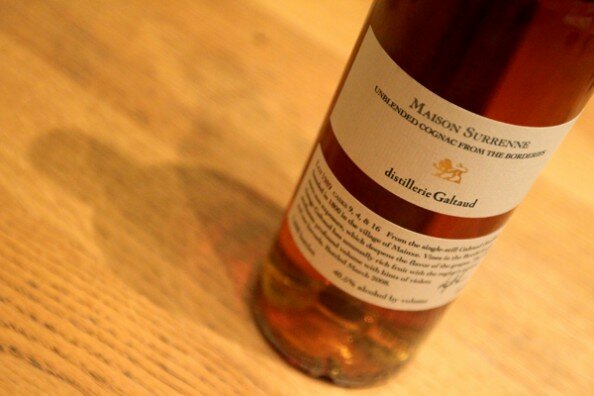
Maison Surrenne is a large distillery, boasting eight cellars of brandy covering multiple regions of Cognac. I’d be lying if I understood the organizational structure and how the family history ties into the business and the region, but it’s worth noting that this bottler is apparently still family owned.
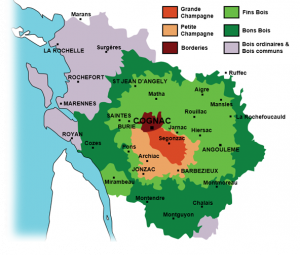 My first purchase was their unblended Borderies cognac, with Borderies being the specific sub-region from which the spirit came. Into my second glass, I can’t disagree with the notes offered on the bottle’s own label: Vines in the Borderies get more sun exposure, which deepens the flavor of the grapes. The single-vintage Galtaud has unusually rich fruit with the region’s typical attributes: profound volume with hints of violets and nut kernels.
Galtaud is the single-still distillery, founded in 1800, at which this cognac was produced. This particular bottling is listed as “Lot 1989: Casks 9, 4 & 16.” One of 1600 bottles produced, this is 40.5% alcohol by volume and was bottled in 2008. According to the Maison Surrenne website, the Borderies region is known for its rich soil deposited in years long past by the nearby Charente River.
This is all new to me, but you can certainly taste that richness and depth: Maison Surrenne is delicious stuff. It absolutely smells like violet, toffee (or perhaps nut kernels, a descriptor with which I’m unfamiliar), and even caramel. And on the palate, the floral, violent sensation absolutely hits me over the head. It’s incredibly noticeable, though refined and elegant. The finish is hot, spicy, and alcoholic, but it’s violet again and cocoa nibs that linger for me. There’s a moderate orange/apricot sensation somewhere in there that I can’t quite pinpoint. This isn’t a sweet spirit, but it certainly has a sweetness to it derived from the fruity and nutty qualities. Despite even that, it’s got a long, hot, dry finish full of flowers and alcoholic spice. How can anyone not love such a thing?
Regardless of what wine media-driven adjectives I could possibly ascribe, the bottom line is that this is one classy spirit. For the first time ever, I understand why the stereotypical wealthy baron of cinema asks people to retire to the study for some cognac or other brandy. This is good drinking. Great drinking.
Cognac at this level is, for me, a revelation. Further study is required, and I’ll be working a lot of extra hours to (happily) pay for that self-imposed research.
Quick Tasting Note: Fauterie 07
As much as I love shopping locally for wine at places like Western Market or Elie Wine Company, the reality of life in Michigan is that our three-tier system and distributors often serve as a barrier to new things. In some respects, we have one of the most vibrant food retail scenes in the country — people elsewhere would be thrilled with our assortment of ethnic markets, our farmers’ markets, and our access to all sorts of ingredients within a few minutes drive time of any area of Detroit of the suburbs — but it’s like pulling teeth sometimes to get the best wines, beers, and spirits.
Tonight, I’m drinking a bottle I picked up at New York’s Chambers Street Wine: Domaine de Fauterie’s 2007 Saint Joseph from Les Combaud. Wines from this region have to be predominantly syrah, and that’s fairly evident here from the inky color. Despite the heavy looks, it has some lightness. Initially ripe and fruit forward, there’s a lot of bright acidity on the finish — a very currant-like flavor. The longer it sits, the more evident the tannins and a subtle campfire smoke flavor become. With a case discount, I paid $25 for this bottle, and it’s worth every penny. Delicious but packed with both power and nuance.
(13% abv. Imported by “USA Wine Imports,” a Jeffrey Alpert Selection, who’s also responsible for some delicious Jura wines I’ve had recently.)
A Taste or Two. Or Twenty Four.
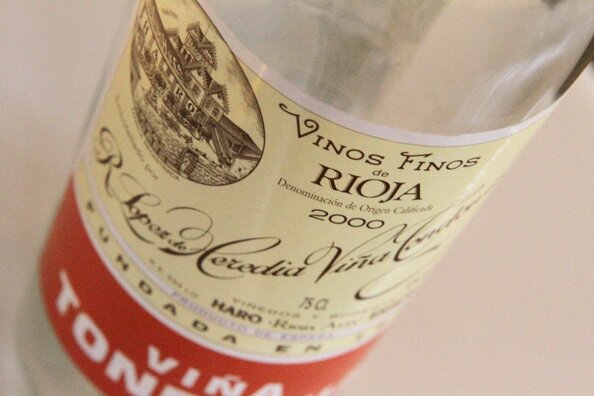
Much like the moon, my drinking habits have certain predictable phases. Coffee in the mornings. Tea in the afternoons. Cocktails for a few weeknights, wine for a few weeknights, beer for sports weekends or long nights out around Detroit.
This past week was a wine week. A phase. A big phase.
Starting with an opportunity to eat and drink a bit at Cork Wine Pub with some fellow GU Detroiters — James Cadariu, Steve Kirsch, Michael Lindberg, and Jarred Gild among them — and Louis/Dressner wine rep, Josefa Concannon, this wine phase of mine got off to a delicious start on Wednesday the 30th. Jeffrey Mar at Cork does a nice job rotating wines through on the list, keeping things interesting: We had newer Chablis (09 Seguinot-Bordet), Sancerre, and a couple of reds. It wasn’t the right place or atmosphere for taking notes, so I didn’t really get many, but one of the highlights on which I do have some notes is the 07 Mondeuse from Franck Peillot, which has been a staple of Jeff’s wine list since Cork opened.
2007 Peillot Mondeuse, Bugey, France
Imported by Louis/Dressner
Over email, there was some discussion among the GUD group regarding food and wine prompted in part by an article from Eric Asimov regarding his views on the subject. This wine is a perfect illustration of many of our conversational points: It’s delicious on its own, but there’s something transformative that happens with food. Loaded with mild, prickly tannins, this is bone dry on the finish, and there’s something about the way the tannins give way with food that opens up the bright, fleshy berry flavors and herbal flavors in this wine. This is impossibly dense and flavorful given its low alcohol content. Delicious stuff. Mondeuse is uncommonly seen in the US, but it’s gained a cult following through the efforts of importers like Dressner and places like Cork and Western that sell those wines. I dig.
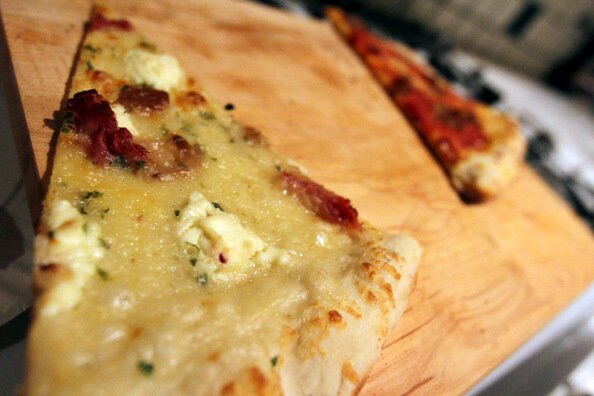
Thursday, I snagged some carryout from Supino on the way home from work, and Jarred, James, Josefa, and I were joined by Kim and George at Gang of Pour. We drank bits and pieces of more than a dozen bottles, with delicious wines from the Canary Islands courtesy of Western Market and high expectations fulfilled by an older Muscadet and some 2003 Clos Rougeard.
2002 Luneau-Pepin L d’Or Cuvee Medaillee, Muscadet, France
Imported by Louis/Dressner
One of the things that surprises people as they become more interested in wine is that some white wines can age. Even more surprising is that inexpensive whites from regions a lot of people have never heard of can age. Because of the acid, good Muscadet is no different, and this is damn good Muscadet. (Thanks to Kim and George for sharing!) The nose on these wines always seem tight – almost like you’re trying to smell it on a rainy day when only the moisture and humidity really make its way into your nose. Here, its just a stone cold aroma of minerals and maybe a bit of citrus peel. It’s fleeting though. On the palate, this has the weight one would expect from being aged by the winemaker sur lie (i.e., aged on settled yeast and fermentation byproducts). It’s hard to believe this is a 2002 as it’s quite vivid and alive — plenty of citrus, acid, and minerality with a grassy, rainy quality that hangs on the tongue and gets cleaned up by a finish with tons and tons of acid.
2008 Zdjelarevic Grasevina, Slavonija, Croatia
James was kind enough bring to our gathering another of his Eastern European treasures acquired on his trip last year. There’s a long pause after everyone inhales the downright tropical aromas and takes the first sip. Everyone concurs that this wine is unlike just about anything we’ve had before. The nose is overflowing with honey, melon, maybe even mango aromas. It’s more powerful than layered, but it’s nonetheless enticing. On the palate, it initially seemed sweet and kind of boring. The more I drank it, the more I could taste all sorts of fruits and herbs — pear, orange, melon, lemongrass. It doesn’t have a long-lasting, powerful finish of any sort, but this was memorable and unique among wines to which I’ve been exposed in my life.
2007 Catherine & Claude Marechal Bourgogne Rouge
Imported by Louis/Dressner
This producer makes one of the best values in all of wine, and this is it. Locals can find it at Western Market. If you’re a fan of red burgundy, this is the best “everyday” option in the state since it’s so much more nuanced than you’d expect from an inexpensive wine. Raspberry and tart cherry up front and a beautiful, penetrating finish. It’s sexy but focused. Just great stuff.
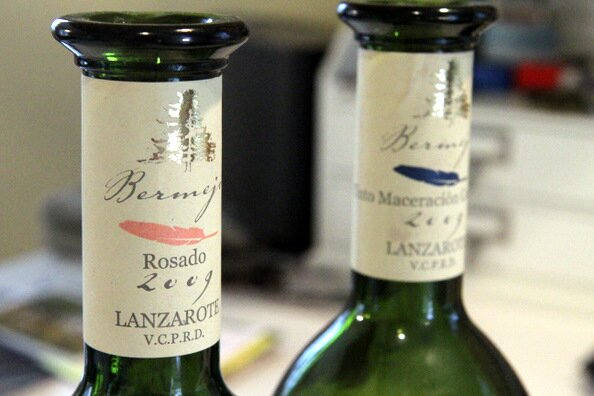
2009 Bermejo Lanzarote, Canary Islands
Imported by Jose Pastor
There’s a method of fermenting wine known as carbonic maceration. In short, it involves fermenting the sugars while the juice is still inside the grapes rather than having crushed the grapes first. So whole grapes sit and ferment, and the resulting wine tends to be low in tannin and has a strong emphasis on fruit flavor. This particular example smells sweet, as one might expect, and while wines made by this method have never been my personal favorite, this is undoubtedly well made. It’s densely packed with flavors, and while the lack of tannic structure or acid isn’t my thing, it’s impossible not to be impressed with the soft, velvety texture. This is nothing like the plastic fakeness of industrial Beaujolais (as opposed to real Beaujolais, which I love), which commonly undergoes carbonic maceration. This is real wine, and it was another new experience. After all, I’d never had wines from the Canary Islands, and the Listan Negro grape from which this is made is a new thing to me.
2009 Bermejo Lanzarote Rosado, Canary Islands
Imported by Jose Pastor
The same producer and same importer and same retailer brought this delightful rose wine to my table that evening. It pours just a bit orange and reeks of flowers and berries. Fruit dominates the palate with some hints of stone and herbs, but this is fundamentally a dry wine. Most importantly, it is the very definition of quaffable. Fun stuff and perfect for what appears to be the forthcoming warm weather.
 Lini “Labrusca” Lambrusco Rosso, Italy
Imported by Domenico Valentino
Prickly and dry, this is crazy good. Berries, herbs, bubbles. It’s not a tense or angry wine, but it strikes me as more serious than the bubbles and label might indicate initially. This has been available in the Detroit market for several months, and it made its unofficial debut at the Home Slice event at Eastern Market last fall. Jarred at Western carries this as well as the white and rose versions, all of which are delicious.
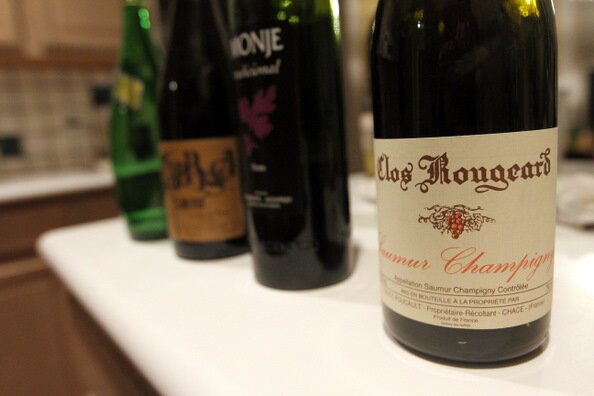
2003 Clos Rougeard, Saumur-Champigny, France
Imported by Louis/Dressner
Josefa, a representative of the importer for this wine, explained that all of these wines spend two years in the barrel and two years in the bottle before being released to the market. I bought this in 2007, 4 years after the vintage date and upon its release, from Putnam Weekley at the old Cloverleaf market. It’s been in the cellar, and it was drinking like a rock star wine that night. This is the type of wine that has led us to absurd tasting notes: It’s SO complex and SO layered that people like me want to describe every crazy flavor in the glass. I’m mellowing, so I’ll avoid a treatise on a single bottle. But in general, this has everything going on: There’s definitely some black fruit here, but it has a much more masculine, animalistic flavor with a perfect, elegant balance of acid, tannin, and fruit. This is what I want out of wines in middle and upper tier price points. One could sit there and smell this for a half hour and then spend all night with this bottle, just loving every minute of it.
After a high degree of interest from the GUD discussion group in an introductory community wine tasting, Jarred and I met with some other folks to (a) discuss how we might put something like that together and (b) drink some more great wines. Among the highlights…
2008 Jean Francois Ganevat Cuvee Julien, Jura, France
Imported by Jeffrey Alpert
This particular wine from Ganevat, purchased from Chambers Street Wine in New York, is exclusively Pinot Noir. With far more minerality and light, playful edginess to it than most burgundy but with more funk and earth than many Jura wines, this does a nice job of bridging those two worlds. Sour cherries, chalk, tannins… it’s all there. Light bodied and really very easy to drink. While it was tasty now, I think the acid, tannin, and fruit are all in such high concentrations that this would last some time in a cellar.
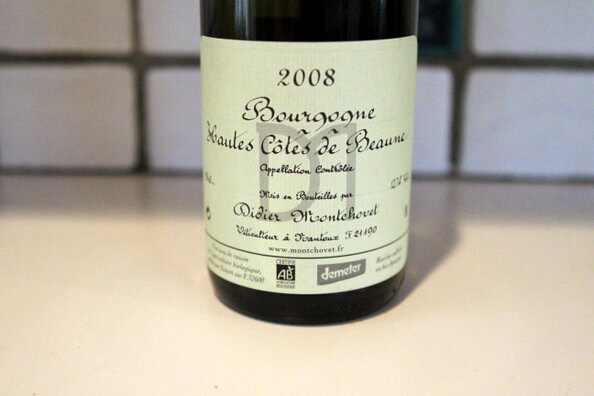
2008 Domaine Montchovet Hautes Cotes de Beaune, Burgundy, France
Imported by Jenny & Francois
Chardonnay is often referred to as the winemaker’s grape since it’s fairly malleable in terms of flavor — it can convey mineral and terroir in a minimalistic winery and it can coat one’s tongue with tropical fruit and vanilla in a New World paradise. But this fits no paradigms, no expectations that anyone could possibly have of white burgundy. All the elements are there, but the sum of those parts is something unique. Citric as though it were some bracing Loire Valley wine, it smells of lemon. And oak is certainly there, but so are peachy, fleshy fruits. Together, it’s a powerful shot of flavor. It’s not something I’d call a drinking, quaffing, cocktail style wine, but it’s interesting and requires your attention. Another wine I suspect you can only/most easily find at Western Market around here…
That’s it. Those are the highlights of the last ten days. In that time, I’ve more than filled my recycling bin with two dozen empties.
What, oh what, will the neighbors think?
You’d Think We Were Drunks
Blogging for Gourmet Underground Detroit has been fairly drink-heavy of late, with Todd, Dave, and I posting mostly cocktail recipes and suggestions for waiting out blizzards using only wit and whiskey. Not a whiff of food-related comments or links to be found anywhere.
Tonight, that changes. But only because I want to mention a wine or two.
Worry not, food lovers. A feature on grass-fed meats is on its way. But in the meantime, snuggle up to your lover with an adult beverage. Perhaps one of those that follow.
Unnamed Tea Cocktail
I discovered a bottle of black tea gin in the back of my cabinet, an infusion that I’d made last year in order to make Dave’s Laura Palmer. Inspired by that drink, I tweaked the proportions seeking to emphasize the bitterness in the tea. In essence, I just swapped out limoncello for Aperol:
1.5 oz black tea infused gin
.75 oz Aperol
.75 oz lemon juice
.25 oz 2:1 simple syrup
I shook this with ice, strained it, and served it up. The lemon and the tea are dominant, but the Aperol adds a nice bitter edge to the end. Matches up nicely with the herbal/tannic quality from the tea, but it’s still refreshing.
Some Weekend Wines
Fellow GUDer Todd Abrams came over on Friday night, and over deeply intellectual discussion (read: drunken and aimless arguing) regarding American poets, he, my wife Susannah, and I drank well — a few cocktails and a couple of great bottles of wine.
Todd brought some Domaine de Roally Viré-Clessé Tradition, which manages to never, ever disappoint. Despite its heritage as a white burgundy (albeit from a lesser known appellation), I always think this has a really pleasant mineral quality to it, no doubt a result of the vines being grown in a limestone-rich area. Roally always explodes on the palate — lemon, toast, fleshy fruits, stone. It’s subtle in its complexity, but there’s nothing subtle about how it lingers and continues to dole out flavor. I’m always happier for having opened a bottle of this.
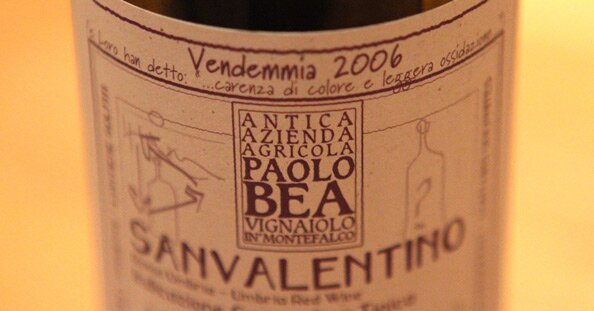
We also got into a bottle of Paolo Bea’s 2006 San Valentino, brought to us by reliable wine importer Neal Rosenthal. Located in the central Italian region of Umbria, Bea makes some of the best wine I’ve ever had. This bottle in particular is something of a treat since it normally would retail for double what I paid. This particular bottle was rejected by the Italian wine police, who didn’t allow Bea the DOC label because the wine wasn’t deeply enough colored and because it was showing a bit of oxidative brown. He released it as an IGT, and I’ve now plowed through three bottles. This, like the previous two, was excellent. Unlike its “big brother” flagship wine from Bea, this bottling is very soft throughout the whole glass without quite as much tannic power as Bea’s bigger wines. Still, it’s remarkably complex — cherries and red currants, very floral nose, and layers of herbs and spice, something it very much shares in common with the other Bea wines I’ve had. The predominant grape in this wine is Sangiovese, but italso has Sagrantino and Montepulciano. This producer makes wines that can hold themselves up and age for a bit, impossibly layered, but that are also every bit as fun to drink as a ripe, acidic natural wine.
And have fun drinking it, we did.

