
GUD FEATURE ARTICLE
The Hospitality of Spirits: A Journey to Eastern Europe and the Celebration of Booze, Family, and Life
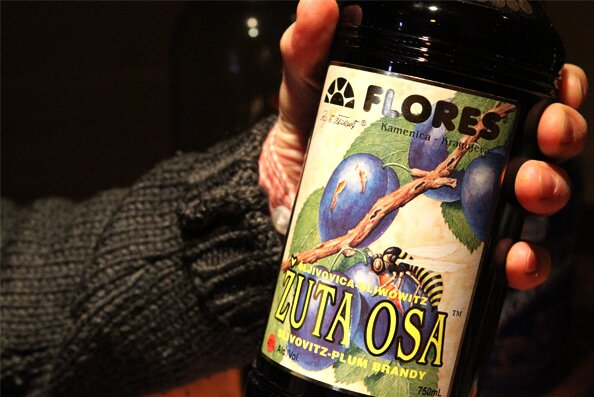
Serbian Spirits
My true love of Eastern European hospitality sprang up in Belgrade, Serbia in 2007. My last aunt born in Serbia had died and left my dad a small sum of money. Being a generous and sentimental fellow, Dad planned an expedition to Serbia and Romania for the family. I’d been to Romania before but never Serbia due to the incessant conflicts during the 90s. Mom, Dad, brother and I set out for the ancestral villages on both sides of the border.
We flew into Belgrade and our cousin Ovidiu, or Ovi, met us at the airport. Dressed in all black with black hair and a stocky frame, Ovi looked much like an Eastern European gangster, or at the very least, our protection from Eastern European gangsters. It’s fortunate that my dad had met him before.
Being Romanian American in Serbia would have been a challenge, as we don’t speak Serbian. Serbian died out with my grandmother who was born there but ethnically Romanian. Ovi was the language link to our own past.
 We checked into a hotel for the night and headed to the Shadorska, the Bohemian district of Belgrade, for dinner. You could tell Ovi didn’t make it into the city often. He was as excited as we were. As we walked down the curving cobblestone street, two women called out from the restaurant Dva Jelena. They were framed in the restaurant entrance by a mass of cascading flowers. This was the place we were meant to be.
The interior was all inlaid woods and mystery. Drinks were needed. I wanted to try some slivovitz. It was only normal and the list of brandies was no smaller than an entire page. I looked to Ovi to translate. As his eyes scanned down the page through the selection of slivos, he paused. He turned towards me and in a reverent tone said, “zuta osa.”
I had no frame of reference for what those two words meant, nor what they would later mean. I did not expect them to signal a shift in how I viewed the world. Ovi explained that zuta osa was special slivo. It meant yellow wasp but had another meaning. Yellow wasps were an indicator to the plum farmer that the plums were ripe for picking. The secondary meaning was due to the color of the plum brandy once it had been distilled and aged in oak barrels. The color was as yellow as the wasps. We ordered a round.
Ovi had a simpler rakija. He wanted us to have the best out of respect. A tray of shot glasses was brought out with no fanfare. Amber in color and fragrant as an orchard in autumn, the zuta osa beckoned. As I lifted the glass to my mouth, I felt connected with another world, with my family, with my forebears, with this new, old land.
My mouth burned with alcohol as I took a sip. Then the fruit exploded on the finish as the heat migrated into my stomach. Noroc, the ancient Romanian toast hung in the air then disappeared. Plates appeared laden with peppers of all shapes and colors. I was home.
It was a feast. Musicians entered the scene. As they struck the first chords, the man at the adjacent table began to sing. The songs were melancholic, nostalgic, the same feelings I was beginning to understand about a place I’d never known but now occupied.
Family Spirits
We arrived at the farm in Sutjeska the following day. The land was flat and wide, full of sunflowers, corn and fisheries along the Danube. The houses of the village were huddled together as if for protection. We pulled in the drive and stopped at a rusty, metal gate behind which was a courtyard full of strutting chickens. Could they be dinner?
Silos of dried corn framed out the courtyard. I could see around me all the simple signs of sustainable living we have become so enamored with in the West. We entered the main house, put on slippers and entered the living room. A family waited.
As I was introduced to these wonderful people, a tray of slivo was produced, this time homemade. Noroc! While the men toasted each other the women brought out plate after plate of food like bees returning with pollen to the hive: pork schnitzel, roasted potatoes, red pepper salad, fresh bread, on it went.
Bottles of homemade wine accompanied the feast. I realized I might never have a meal again as fresh as this. I was home. As the celebration continued, more and more relatives arrived. Meal one was followed by meal two after an interlude of intense conversation: more schnitzel, roasted chicken (aha) and a plate of house cured pork beyond imagining. We slept a country sleep.
 The next morning more relatives came. One guy, when offered coffee, then beer, said yes to both. After that, we went to the big town of Ecka where my paternal grandmother was born. We cautiously drove down a road of uneven, hand laid bricks. A short man in all black and a fedora haled us from his bicycle. He invited us into his house.
We sat at a simple kitchen table and were offered quince brandy and a plate of cured pork. Noroc! They had been waiting. As we discussed the brandy, the man agreed to take us down the street to see the local brandy distiller.
The distiller was a Serb who greeted us at his gate. He explained the process and showed us the copper alembic still assembled in his garage. The Serb mainly made plum and apricot brandies and proceeded to produce two clear bottles. He commanded us to drink in Serbian. Though we couldn’t understand the precise words, we knew exactly what he meant.
We took deep swigs and passed the bottles around. The fiery fruit greeted us like a slap and a hug. We were flying. Beware of Eastern European men bearing clear unlabelled bottles.
Simple Spirits
As the crow flies, my grandfather’s village Guilvaz is only 40km from my grandmother’s village in Serbia. What God had joined together in geography man can somehow sever. Banat, the region, straddles the border of Romania and Serbia. Through communism, wars and Romania’s ascension to the European Union, now it takes about 3.5 hours to drive between villages, past closed borders, and through nonsensical zigzagging turns in the road.
Ovi drove us to the border after a random stop at an official’s house for what I assumed was a furtive payment to let us cross the border. Our Romanian driver, also named Ovi, met us on the Serbian side. Hello Ovi, goodbye Ovi.
Guilvaz is much poorer than Ecka and Sutjeska. An E.U. sign met us on the outskirts of town. A new lamb abattoir had been built. Our cousin in the village later told us the owners wouldn’t hire local Romanians because they feared the locals would steal the meat.
As we drew close to the village a train rumbled by with its doors flapping open and closed. Another man in a fedora on a bicycle caught up to us and showed us the way to our destination. Where do these guys come from?
The road had never been paved. It was rutted as if a meteor shower had rained down and grass had grown over the enduring indentations. We passed a ruined church, abandoned buildings, a horse grazing in front of a house, and an old woman planting seeds.
After reaching my cousin’s house the road gave out to farmland. Nearby, a healthy, white pit bull sat in the driver’s seat of an old Dacia car. We ducked to enter the doorframe of the house. Not just the big news in the village, we were the tallest people by a foot.
We walked through a small room with a tile furnace and a low wood ceiling before entering a dining room where a colorful table had been set. After being poked and prodded by the newfound relatives, a clear bottle of tuica (Romanian for plum brandy) was produced and glasses raised.
This time the brandy was all fire and brimstone, hellfire and damnation to follow — rustic, you might say. The food was simple and fresh: house-cured pork, sausages, tomatoes, cheese, peppers, roasted chicken and potatoes. More relatives arrived from Timisoara, the big city. More glasses were raised and drained.
We went to see my grandfather’s house and were met by a couple of squatters who were ill prepared for my dad’s arrival and story. They were from an even poorer region called Oltenia and insisted that they had paid money for the house. It was rather unlikely since my grandfather had bought the house when he went back in the 50s. Moreover, they were the second couple I’d met in the same house with the same story. My dad could have reclaimed it post communism but he wasn’t going to kick these people out. For what good?
Sophisticated Spirits
From village relatives to the city relatives, we drove from Giulvaz to Deva, a mid-sized Romanian city in the mountains best known as the headquarters for Romania’s powerhouse gymnastics program. Dan, Rodica and their daughter Tana have stayed with us in the U.S. and we know them in a less awkward way than the man-on-a-bike-style relatives from the villages.
Dan is an architect and had redone their Communist-era condominium apartment since last I had darkened the doorstep in 1993. Walking up the uneven steps in the dark stairwell I smelled the signs of communist construction. I wasn’t prepared for the marvel of design that lay behind door #26.
 Dan had gutted the small kitchen, living room and one bedroom to install a completely open floor plan. One side featured a plaster wall with asymmetrical cubbies housing Romanian art. The other side was a curving kitchen bar and a backsplash made of limestone from a local quarry.
Next stop was the liquor cabinet. There was Tuica and a toast from Dan. It seems that the German toast “prost” actually means dumbass in Romanian and Dan made full use of this fact. But then, Dan is also a part-time comedian and a chain-smoking ringer for Vladimir Lenin.
We ate beet soup with sour cream, spit-grilled lamb and a macedoine of vegetables. Then Rodica brought out a papricas of mushrooms served over a bed of mamaliga, the Romanian national dish or cornmeal mush or polenta if you prefer. A bottle of Feteasca Neagra complimented the spicy paprika dish.
After the meal, Dan wanted to show off his new Audi and some of the buildings he’d designed around Deva. We blew through the empty streets with the ominous Deva sign shining on top of the citadel, Hollywood-style. He showed us a hotel, church and a bank, all very modern in contrast to the crumbling apartment blocks and remnants of traditional structures. The only sounds heard above the hum of the A6 engine were the barking of stray dogs.
High Octane Spirits
The next day a long drive took us out of the mountains and back towards the Danube River and its delta. The hills were terraced with vines. Turkish and Tatar villages occupied the land amid the reeds and wetlands. We ferried the Danube at Galati. The land was losing sway to water and thatch appeared as a roofing material.
We drove a single-track road until it ended in the middle of a field. We were lost. Someone produced a phone number for the boat launch and we made our way back to a beach-like pond area filled with boats, rusty buildings and lazy dogs. We clambered aboard an open-air skiff. The luggage was casually tossed in the back of the boat causing the boat to sink within an inch of the river level. Meanwhile, darkness prevailed.
 The boatman pushed off from the shore, opened up the motor and we were hauling ass in the dark through a narrow channel as trees whizzed by. The luggage shifted and I had to wrap my arms around it before it slid into the Danube. We started letting out whoops of excitement as we banked from the narrow channel to the wide-open Danube. You could feel the immensity of it even if you couldn’t see it. The sound shifted, the wind shifted, the boatman was guiding us through pure experience.
Nothing was visible either in front of us or on the shore for that matter, wherever it might have been. We were fully at warp speed. At a certain point our eyes adjusted to the darkness and we could make out the faint outline of trees lining the riverside. The only light we saw before the hotel was a fire someone had lit.
As we approached the hotel, the light grew but it still felt lonely. The light was dim. The darkness was great. There was no doubt that nature was in charge out here. The boatman guided us expertly alongside the dock and, like a gymnast dismounting from a pommel horse, jumped out of the boat and tossed our luggage on the quay in one fell swoop.
In the shadows was a man holding a platter. He was dressed in a bowtie and vest with an immaculate and majestic walrus mustache. Poftim, he said. Please drink. On the platter were shot glasses filled with palinca, the even more fiery sister to tuica. We all did rapid-fire shots, including my mom, a lifelong teetotaler, and the boatman.
Artistic Spirits
Believe it or not, a trip lasting from the hinterlands of Serbia to the Black Sea coast would end up in Bucharest at the exact same time as a NATO meeting featuring then-President Bush. The streets were clean (unusual for Bucharest), quarantined and quiet. It took some logistics just to reach our hotel. What was even more surprising was a blanket ban on alcohol sales along the diplomatic route. The only time I’d encountered such a prohibition was in India during election voting and after a tour of the Labrot Graham distillery in Kentucky. But we were in Bucharest, not Bourbon County.
We checked into our hotel near Piata Victoriei and walked around the corner to Ioan Nemtoi’s studio. Ioan is a friend of my dads and an expert glassblower whose glass art we import into the U.S. His studio has an ‘Alice in Wonderland’ aspect to it with crashing colors and myriad shapes arranged on pedestals fabricated from metal and wood.
 Ioan was late so I waited out on the street. A leggy woman approached with a head of blonde hair so thick I couldn’t see her face. She greeted me with “buna” and slipped by into the gallery. The woman was Ioan’s stepdaughter who I was being fixed up with later.
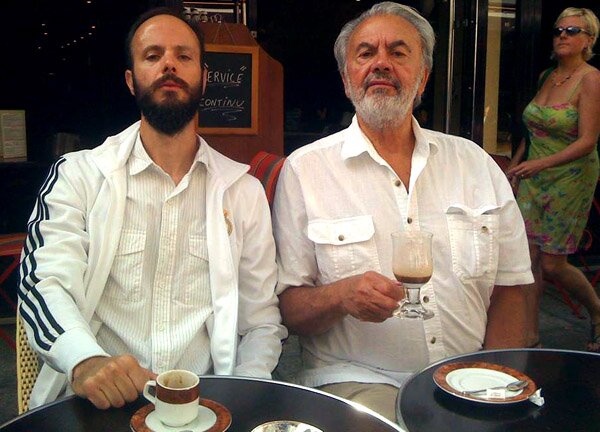
Ioan arrived shortly, squat and bearded like an Orthodox priest. Typically only priests wear beards in Romania, so with Ioan, my dad and I similarly bearded, it was like an Ecumenical Council of the Patriarchs. It ended up being a species of communion. Ioan’s eyes danced as we recounted our exploits and inability to get a drink in Bucharest. Not to worry, he exclaimed, and disappeared into a room at the back of the gallery. Out he came with a two liter plastic bottle filled with crystal clear liquid. We toasted to life, art and matchmaking. He and my dad laughed the loudest.
Home Spirits
My dad and I import art from Romania and hope to expand into wine in the near future. The main thing I have imported thus far is the disposition of the hospitality of spirits.
With this outlook, I had a basement party last year filled with house-cured pork, plum brandy (zuta osa is available locally) and Romanian music. This is the ethos of the Gourmet Underground Detroit: curing pork, making sausage, fermenting vegetables and beverages, canning, toasting, and celebrating. All these iterations were in evidence at the Holiday Food Bazaar last December organized by Noelle Lothamer. It was as much social as commercial.
At some point all of our ancestors brought their traditions to this area. Sadly much of our handed-down knowledge has been severed by corporate food business and the desire to make money above all else. But there is something inside us which longs to be in touch with nature and other people. This spirit cannot be bought or sold. It can only be celebrated. Noroc.
2011.02.13 James Cadariu at 9:46 pm
This entry was posted in Features and tagged brandy, europe, slivovitz, travel, wine. Bookmark the permalink.




One Response to The Hospitality of Spirits: A Journey to Eastern Europe and the Celebration of Booze, Family, and Life
James,
Wonderful account. Gourmet Underground Detroit is an excellent site.
Give my best to your dad.
Dennis